




Bordeaux Wines
Bordeaux wine is a world heritage site. Bordeaux wines are made up of numerous appellations, the best known of which are Saint Emilion, Margaux, Pessac Léognan, Pomerol, Médoc, Pauillac, Saint Julien and Sauternes. These are just some of the wines that have made Bordeaux a myth of great classified growths. The grape varieties most commonly used are Cabernet Sauvignon, Merlot and Cabernet Franc for Bordeaux red wines, and Sauvignon, Semillion and Muscadelle for Bordeaux white wines. There are also some great Bordeaux wines in lesser-known appellations such as Chateau Alta Gaia and Chateau Grand Pey Lescours.
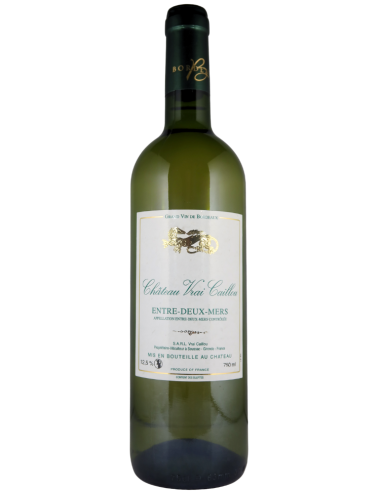
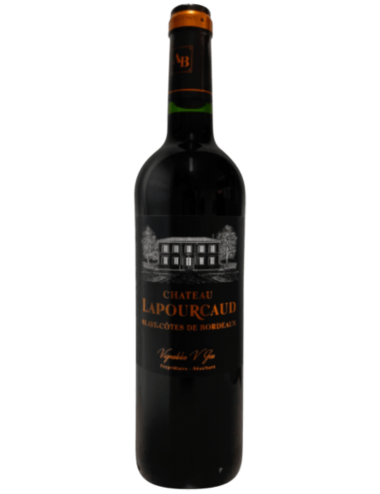
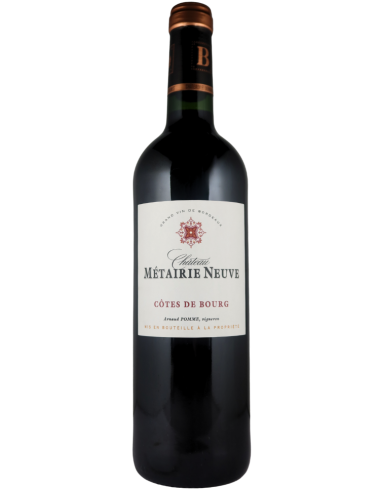
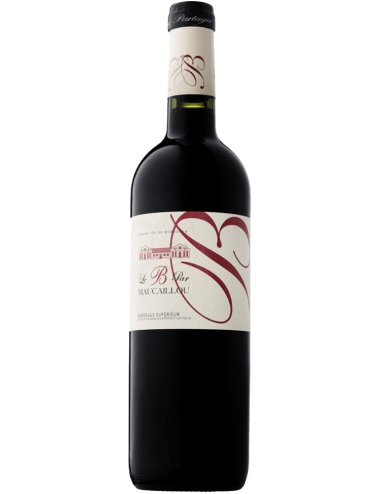
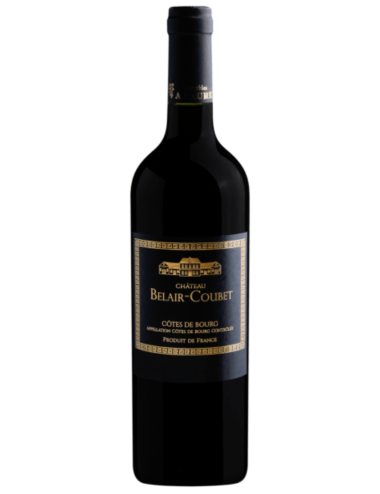


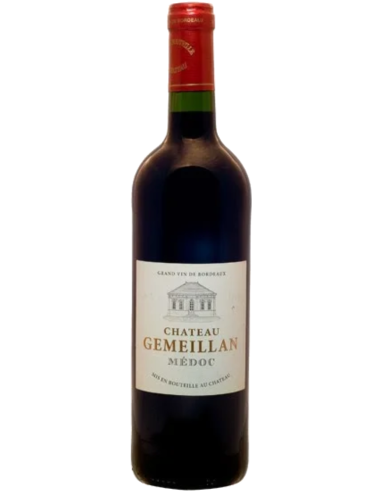



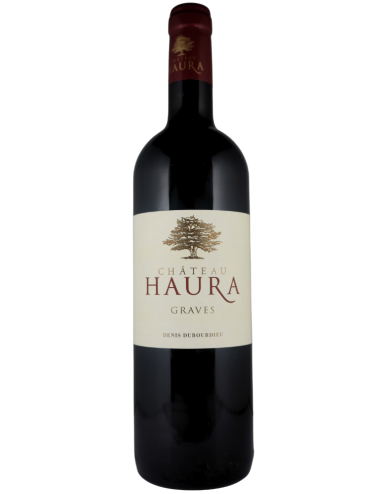


Château Haut-Bessac Bordeaux Supérieur 2022 75 cl
Graves de Vayres Château Haut-Bessac
#970600

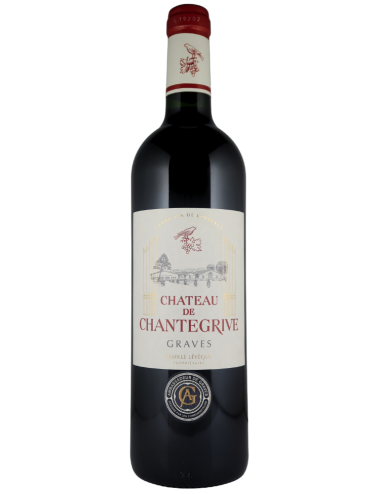

Bordeaux wines
#TERROIR : Soil, Climate, Geography, History
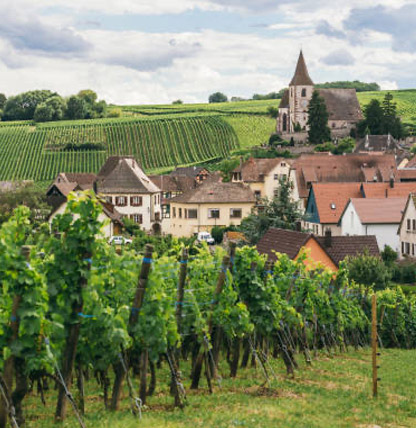
Bordeaux vineyards, France
The Bordeaux vineyards, located in the Gironde department of southwestern France, are world-renowned for their prestigious, expensive wines. It produces around 80% red wines, such as Pomerol and Pauillac, and 20% dry white wines (Entre-deux-Mers, Pessac-Léognan), sweet white wines (Sauternes, Cadillac), as well as rosés, clairets and sparkling wines (Crémant de Bordeaux). The diversity of the 38 appellations reflects the wealth of terroirs, grape varieties and winemaking methods. With 117,200 hectares under cultivation and an annual production of five to six million hectolitres, Bordeaux is France's leading wine-producing department in terms of AOC volume, ahead of Hérault and Aude in terms of total production.
Bordeaux vineyard terroir
The Bordeaux vineyards are renowned for the diversity and quality of their production, spread across several distinct terroirs.
The Bordeaux and Bordeaux Supérieurs appellations form the basis of the vineyard, offering wines of great accessibility. Blaye and Bourg, to the north, have varied clay-limestone soils that give balance and finesse to the wines. The Médoc and Haut-Médoc are distinguished by the richness of their terroirs and gravelly soils, bringing structure and complexity to their red wines. The Graves region, south of Bordeaux between the Garonne River and the Landes plateau, is famous for its gravelly soils and refined red wines. Sauternais is renowned for its sweet wines, produced on both sides of the Garonne, while Entre-Deux-Mers benefits from its location between the Dordogne and Garonne rivers to produce elegant dry whites. Finally, the Libournais is a prestigious area, mainly dedicated to high-quality red wines, notably Saint-Émilion and Pomerol.
This geographical distribution and the diversity of soils and grape varieties contribute to the worldwide renown of Bordeaux's vineyards.
Grape varieties of Bordeaux wines
Bordeaux wines are distinguished by a rich diversity of grape varieties carefully cultivated in this prestigious wine region.
For red wines, Merlot dominates with over 60% of plantings, followed by Cabernet Sauvignon at 25% and Cabernet Franc at 11%. Other red grape varieties such as Malbec, Petit Verdot and Carménère are present in very small proportions, bringing unique nuances to certain blends.
For white wines, Sémillon is the main grape variety, accounting for 53% of plantings. It is closely followed by Sauvignon Blanc at 38%, and Muscadelle at 6%. Colombard and Ugni Blanc are also grown, contributing to the diversity and complexity of Bordeaux white wines. These white grape varieties enable the production of wines ranging from dry and refreshing to sweet and rich, each expressing the distinctive terroir of Bordeaux.
Bordeaux cellars
The vineyards of Bordeaux are home to some particularly remarkable cellars, blending historical heritage with architectural innovation. Château du Taillan captivates with its 16th-century cellars, where history blends with classical architecture, while Château Talbot impresses with its futuristic cellar structures in the shape of vine stocks. Château Cheval Blanc offers a striking contrast with its concrete sails, designed by Christian de Portzamparc, and a modern design that enhances its surroundings. At Château Franc Mayne, visitors discover historic underground quarries, now used for maturing wine. Finally, Château La Dominique stands out for its mirrored cellar, designed by Jean Nouvel, which blends elegantly into the winegrowing landscape while offering spectacular views. These cellars embody the architectural and viticultural richness of Bordeaux, offering visitors a unique experience at the heart of wine tourism.
#APPELLATION: Classification and Structure
Bordeaux appellations
The Bordeaux wine region, one of the most prestigious in the world, is marked by a wide variety of appellations reflecting its rich terroirs and winemaking traditions. Here's an overview of the main appellations:
Bordeaux AOCs
Bordeaux Red
The Bordeaux appellation (red) is emblematic of the Bordeaux region, covering a vast geographical area of 35,003 hectares with a great diversity of soils and terroirs. Red wines from this appellation are mainly made from Cabernet Franc, Cabernet Sauvignon, Malbec, Petit Verdot and Merlot grapes, offering characteristic richness and complexity. They are distinguished by aromas of red berries, blackcurrants and violets. On the palate, these wines are supple, fruity and not too robust, making them pleasant and accessible to drink. Designed to be drunk young, Bordeaux reds generally improve over a period of 1 to 4 years. They are served at an ideal temperature of 13 to 15°C to fully reveal their aromatic and gustatory qualities.
Other appellations include
Bordeaux Blanc sec, Bordeaux Blanc doux, Bordeaux Rosé, Bordeaux Clairet, Bordeaux Supérieur rouge, Crémant de Bordeaux Blanc sec, Crémant de Bordeaux Rosé
Bordeaux AOCs
Right bank regional appellations :
Canon-Fronsac
Côtes-de-Castillon
Côtes de Blaye
Côtes de Bourg
Entre-deux-Mers
Fronsac
Lalande-de-Pomerol
Pomerol
Saint-Émilion
Saint-Émilion grand cru
Left Bank regional appellations :
Barsac
Graves
Haut-Médoc
Listrac-Médoc
Médoc
Margaux
Moulis-en-Médoc
Pauillac
Pessac-Léognan
Saint-Emilion
Saint-Estèphe
Saint-Julien
Sauternes
Bordeaux's Left Bank and Right Bank appellations are distinguished by their soils, grape varieties and wine styles. The Left Bank, influenced by the maritime climate of the Garonne, is characterized by gravelly, sandy soils that favor Cabernet Sauvignon, producing powerful, tannic wines that age well, like those of Médoc and Graves. By contrast, the Right Bank, with its more continental climate and clay-limestone soils, favors Merlot, producing more supple, fruity and accessible wines, typical of Saint-Émilion and Pomerol.
These differences in terroir and grape varieties lead to significant variations in the style of wines from both shores.
Different classifications of Bordeaux wines
The Gironde region has several classifications, listed in order of age:
1855 classification
Graves classification
Saint-Émilion classification
The Crus Bourgeois du Médoc classification
The Crus Artisans classification
The 1855 Grands Crus Classés classification was drawn up at the Paris Universal Exhibition, at the request of Napoleon III, who wanted each of France's wine-growing regions to establish a hierarchy of its best crus. The Bordeaux Chamber of Commerce and Industry, founded in 1705, took on this mission for the Gironde. The ranking was based on the reputation of the crus and the transaction prices, reflecting their quality and reputation. This unique classification exclusively includes the red wines of the Médoc, the sweet whites of Sauternes and Barsac, and a red cru from Graves, setting a prestigious benchmark in the wine world. The classification is based on 5 levels, from 1er Grand Cru classé to 5 th Grand Cru classé.
The classification des Crus Classés de Graves was established in 1953 at the request of the Syndicat de défense de l'appellation des Graves, with the expertise of the Institut national des appellations d'origine (INAO). In contrast to the 1855 classification, this classification is distinguished by its unique structure, organizing the crus by commune and by type of wine, red or white, without establishing a hierarchy between the different crus. In addition, this classification comprises only one level of classification and is not subject to revision, offering stability in the recognition of Graves appellation crus.
The Saint-Émilion Crus Classés classification was initiated in 1955 at the request of the Syndicat de défense de l'appellation Saint-Émilion, with the intervention of the Institut national des appellations d'origine (INAO). This classification is distinctive in that it provides for a revision every ten years, a procedure that has been followed since its creation, with seven classifications carried out up to 2022. The seventh classification, published in September 2022, was carried out under a rigorous new procedure, overseen directly by INAO and in collaboration with the Ministries of Agriculture and Consumer Affairs. This classification allows for a continuous evaluation of the crus, taking into account the evolution of the wine industry.
The classification of the Crus Bourgeois du Médoc dates back to 1932, when Bordeaux brokers, under the aegis of the Bordeaux Chamber of Commerce and the Gironde Chamber of Agriculture, compiled a list of these crus. This classification aims to recognize châteaux committed to offering quality red wines at affordable prices, while highlighting a wide diversity of characters that enrich their offering. In 2020, the Alliance des Crus Bourgeois du Médoc promulgated a new classification, aimed at all authorized crus in eight Médoc AOCs, with a simplified structure to clarify the offering and refocus the Crus Bourgeois family around the most demanding and consistent châteaux. The classification, valid for a period of five years, distinguishes three hierarchical levels: Cru Bourgeois, Cru Bourgeois Supérieur and Cru Bourgeois Exceptionnel, enabling consumers to better appreciate the nuances of this great historic family of wines.
The Crus Artisans du Médoc classification, which distinguishes small, historic wine estates often run by craftsmen such as coopers or blacksmiths, was revived in 1989 with the creation of the Syndicat des Crus Artisans du Médoc. These small, autonomous operations are characterized by direct management of the vineyard by the owner, and production and marketing of AOC wines bottled at the château. In 1994, European regulations made the "Cru Artisan" label official, underlining the value and quality of the wines produced. Since 2017, a new specification has been introduced, with a classification revised every five years to guarantee the consistency and excellence of the crus in the eight Médoc appellations, including Médoc, Haut-Médoc, Listrac, Moulis, Margaux, Saint-Julien, Pauillac and Saint-Estèphe.
#How does Bordeaux taste?
Bordeaux wines
Grand vin Rouge de bordeaux, Which Bordeaux wine to choose?
The vineyards of Bordeaux are renowned for their Grand Crus, many of whose châteaux are world-famous for the exceptional quality of their wines. Here are some of the greatest Bordeaux wines to consider:
Château Angelus, Saint-Emilion Grand Cru
Château Ausone, Saint-Emilion Grand Cru
Château Cheval Blanc, Saint-Emilion Grand Cru
Château Haut-Brion, Pessac-Léognan
Château Lafite Rothschild, Pauillac
Château Lafleur, Pomerol
Château Latour, Pauillac
Château Margaux, Margaux
Château Mouton Rothschild, Pauillac
Château d'Yquem, Sauternes
Pétrus, Pomerol
Château d'Yquem, located in Sauternes, is renowned for being the world's finest sweet wine, often aged for decades before revealing its full richness and complexity. Pétrus and Château Lafleur, two jewels of the Pomerol AOC, are prized for their rarity and superior quality, with wines that can improve for decades. Château Latour, one of Pauillac's oldest estates, is famous for its power and consistency, while Château Margaux stands out for its elegance and aromatic richness. Château Mouton Rothschild is renowned for its depth and exotic personality, while Château Haut-Brion stands out for its complex aromas and its ability to drink young and keep for a long time. Château Cheval Blanc, on the border between Pomerol and Saint-Émilion, combines opulence and finesse, and Château Lafite Rothschild is prized for its purity and refined aromatic notes. Finally, Château Angelus, with its rich, full-bodied wine, is also highly appreciated for its ability to evolve over the years.
These châteaux are not just wine producers, but symbols of Bordeaux's winemaking excellence, offering unrivalled tasting experiences.
Bordeaux wines, whether red or white, display a range of distinctive flavors and aromas depending on their origin. Red Bordeaux wines, generally made from grape varieties such as Merlot, Cabernet Sauvignon and Cabernet Franc, are often characterized by black fruit aromas such as blackcurrant and plum, combined with spicy and sometimes woody notes. Wines from the Médoc, for example, can reveal nuances of leather and tobacco with firm tannins, while those from Saint-Émilion offer a more velvety texture with flavors of red fruit and chocolate. Pomerols, renowned for their richness, have dark fruit and chocolate aromas, with softer tannins.
As for white Bordeaux, flavors vary according to the grape varieties used. Dry white Bordeaux, often made from Sauvignon Blanc and Sémillon, reveal citrus and white fruit aromas, and sometimes herbaceous or mineral notes. On the other hand, Sauternes, famous for their sweetness, offer rich flavors of honey, candied fruit and caramel, with a balancing acidity that gives them remarkable length on the palate. These characteristics make Bordeaux a diverse range of wines, suited to a variety of taste preferences.
Which Bordeaux wine to drink with roast chicken, couscous or cheese?
To accompany roast chicken, it's ideal to choose a red wine with supple tannins and fruity aromas. Wines from Saint-Émilion offer notes of red fruit and mellow tannins that blend perfectly with the richness of roast chicken. Pomerols have softer tannins and ripe fruit aromas that complement the chicken's flavor. For an elegant touch, Médoc wines will bring refined structure and complex aromas to your dish.
When serving couscous, which is often rich in spices and varied flavors, it's best to opt for a wine capable of keeping up with this richness. Saint-Émilion stands out for its aromatic richness and spicy notes, making it an excellent choice to accompany the complex flavors of couscous. Pomerol, with its fruity aromas and silky texture, is also well suited. In addition, a Pessac Léognan, with its earthy, spicy profile, can also be a good option for richer couscous.
For cheese, the choice of wine depends on the type of cheese served. With soft cheeses such as Brie or Camembert, a wine such as Margaux or Pauillac will provide the perfect balance to their creamy flavors. For hard cheeses such as Comté or Parmesan, a more structured red wine such as Pauillac can provide a good contrast with the rich, salty flavors of the cheese. Finally, for strong blue cheeses, a sweet wine such as Sauternes will prove excellent thanks to its balance between sweetness and complexity.
#MILLENCIES: Bordeaux's outstanding vintages
The best bordeaux wine vintages
What are the best years for Bordeaux wines?
For red Bordeaux, the best years are 1928, 1929, 1949, 1953, 1959, 1961, 1982, 1985, 1986, 1989, 1990, 2000, 2005, 2009, 2010, 2015, 2016, 2019, 2020, 2022 and 2023.
For white Bordeaux , the best years are 1929, 1955, 1959, 1971, 1986, 1989, 1990, 2005, 2009, 2010 and 2019, 2020, 2022 and 2023
For sweet Bordeaux (Sauternes-type sweet wines), the best years are 1921, 1929, 1937, 1945, 1949, 1955, 1959, 1967, 1975, 1976, 1988, 1989, 1990,1996, 1997, 1995, 1996, 1997, 2002, 2003, 2009, 2010, 2015, 2016 and 2019.
What is the average price of Bordeaux wines?
The average price of Bordeaux wines varies considerably according to several factors, including château reputation, appellation, vintage and wine classification.
In general, the most affordable Bordeaux wines are often regional appellations or Bordeaux and Bordeaux Supérieurs. Wines from more prestigious appellations such as Médoc, Haut-Médoc, and certain crus bourgeois or grands crus from appellations such as Saint-Émilion or Pomerol. Bordeaux grands crus classés, such as those from the Pauillac, Margaux, Saint-Émilion Grand Cru and Pomerol appellations, as well as the more renowned Château Lafite Rothschild, Château Margaux and Château Petrus, can fetch prices ranging from several hundred to several thousand euros per bottle.
Exceptional vintages and the most sought-after wines can command even higher prices.