



Champagne
#IN BRIEF: Figures
Region : Champagne
Surface area : 34,300 Hectares
Grape varieties : Chardonnay, Pinot Noir, Pinot Meunier and also authorized but confidential; Arbane, Petit Meslier, Pinot Blanc and Pinot Gris
Aromas blanc de blancs : white flowers, citrus, exotic fruits, apple, pear, spices and menthol notes.
Blanc de noirs aromas : coffee, cocoa, prune and sometimes even leather.
Rosé aromas : citrus, wild strawberry, or on the contrary ripe yellow fruit, red berries or complex notes of wild berries and undergrowth.


Champagne Pascal Lallement Premier Cru Brut 75 cl
Champagne Champagne Pascal Lallement
#ffffec



Champagne Charles Lafitte Cuvée Spécial Brut 1834 75 cl
Champagne Champagne Charles Lafitte
#ffffec


Champagne Charles Lafitte Cuvée Spécial Brut 1834 Etui 75 cl
Champagne Champagne Charles Lafitte
#ffffec


Champagne Gonet-Medeville Tradition Premier Cru Brut 75 cl
Champagne Champagne Gonet-Medeville
#ffffec


Champagne Joseph Perrier Cuvée Royale Brut étui 75 cl
Champagne Champagne Joseph Perrier
#ffffec
Champagne
#TERROIR : Soil, Climate, Geography, History
The Champagne region
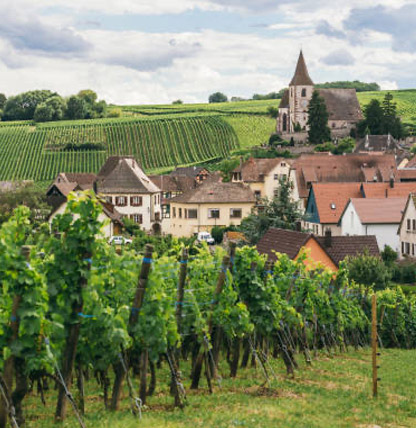
The region Champagnealso known as Champagne-Ardenne, was a region in north-eastern France. The Marne region, at the heart of Champagne, was world-famous for its champagne production. The vineyards of the Marne were renowned for producing some of the world's most prestigious sparkling wines, named after the region. Champagne was thus one of Champagne-Ardenne's emblematic treasures. A history as rich as the history of Champagne.
Champagne-Ardenne was geographically diverse. The Ardennes in the north offered rolling, wooded landscapes, while the Aube was characterized by medieval churches and picturesque valleys. The Marne was the heart of the wine region, with its world-renowned vineyards, and the Haute-Marne was marked by its vast forests and lakes.
History of Champagne
Champagne has a long and fascinating history, dating back to antiquity. Here's an overview of its evolution over the centuries:
The first vines in Champagne were planted by the Romans in the 5th century BC. The region's climate, though difficult, was favorable to viticulture. The wines produced were generally still, with no effervescence.
In the Middle Ages, the monks of the Champagne abbeys played a key role in the development of Champagne wine. They experimented with a vinification method that produced sparkling wines, although this often resulted in exploding bottles. The Champenois perfected this method over time.
In the 17th century, Dom Pérignon, a Benedictine monk, made significant improvements to the Champagne production method, notably by developing techniques to control fermentation and avoid bottle explosions. He is often wrongly credited with inventing Champagne, but his work was instrumental in its improvement.
Champagne gained in popularity in the 18th century, notably thanks to figures like Madame de Pompadour and Louis XV. Iconic Champagne houses such as Moët & Chandon and Veuve Clicquot were founded at this time.
In the 19th century, Champagne became an international symbol of luxury and celebration. It was served to the British royal court and the Russian imperial court, reinforcing its worldwide reputation.
In the early 20th century, France established appellations d'origine contrôlée for Champagne, setting strict production standards to protect its authenticity.
Champagne has become an essential beverage for celebrations the world over, from weddings and graduations to New Year's Eve parties. Many renowned Champagne houses continue to produce exceptional vintages, and the Champagne region remains a pillar of the French wine industry.
Today, champagne is synonymous with festivities and success, and is appreciated the world over for its elegance, finesse and sparkling bubbles, reflecting longstanding traditional know-how in its production.
The combination of these production criteria, historical know-how and artisanal rules has earned champagne recognition as a UNESCO World Heritage Site.
Dom Pérignon, an emblematic figure
Dom Pérignondom Pérignon, whose full name was Dom Pérignon de Saint-Martin, procureur de l'Abbaye de Hautvillers, was a 17th-century French Benedictine monk. He is widely associated with the development and improvement of Champagne wine production. Dom Pérignon lived from 1638 to 1715, spending most of his life in the Champagne region of France.
His most important role was to perfect the region's winemaking methods and introduce techniques that helped improve the quality of Champagne wine.
Among his notable contributions, Dom Pérignon worked on fermentation control, seeking to avoid bottle explosions during champagne production, which were common at the time due to continuous fermentation in the bottles. He also contributed to the use of the cork stopper to close wine bottles, which preserved the bubbles and developed the effervescent character of champagne.
Today, he is often associated with a famous luxury champagne brand named in his honor. This vintage cuvée, made in exceptional years, is produced by Champagne house Moët & Chandon. Dom Pérignon creates only vintage wines, meaning that the grapes all come from the same year, and he does not use grapes from bad growing seasons, which makes it a prestigious and expensive cuvée.
Champagne terroir
Champagne's subsoil plays an essential role in its quality and specificity. Indeed, the geological composition of the subsoil directly influences the terroir and the characteristics of the grapes, which in turn is reflected in the taste of the wine.
In Champagne, around 75% of the outcropping sediments are limestone, comprising chalk, marl and limestone proper. Chalk is particularly predominant. This composition is unique and gives the soil a special texture. Chalk, in particular, is a material that breaks up, promoting soil drainage. This means that water drains easily into the soil, which is essential for keeping the vines' feet dry at all times. Well-drained soil is crucial to avoid excess moisture around the roots, which could be harmful to the vine.
Chalk is highly porous, making it a natural water reservoir. This characteristic is invaluable for vines, especially during dry summers. Chalk retains water and releases it slowly, promoting vine cultivation by guaranteeing a constant water supply for the vines, even in periods of drought. This contributes to the ripening of the grapes and the quality of the Champagne produced.
In short, the limestone subsoil, in particular the chalk, is one of the pillars of the Champagne terroir. It ensures efficient soil drainage, preventing excess humidity, and acts as a natural water reservoir for the vines. These special geological features, combined with a unique climate, contribute to the creation of grapes of superior quality, which is essential for the production of the region's prestigious Champagne and its prestige cuvées.
The Champagne climate
The Champagne climate is characterized by a dual climatic influence, combining oceanic and continental influences. This is unique among French wine-growing regions.
On the one hand, the oceanic influence results in relatively temperate climatic conditions. The average annual temperature is around 11°C. The oceanic influence provides relatively temperate conditions, with mild winters and moderate summers.
On the other hand, this oceanic influence also brings generous sunshine during the summer season, which favors the development of the grape bunches. In addition, rain falls regularly throughout the year, in moderate quantities. This even distribution of rainfall is beneficial for Champagne grapes, as it ensures a balanced supply of water. Thermal stability is good for vines, limiting the risk of winter frosts and summer heat stress.
These generally favorable climatic conditions make the Champagne climate ideal for the production of high-quality sparkling wines.
The best vintages depend on achieving a subtle balance between acidity and sugar levels in the grapes, and the region's climate plays an essential role in achieving this balance.
As a result, Champagne is intrinsically linked to the Champagne climate, and this region is recognized the world over as the birthplace of this world-renowned sparkling beverage. Champagne producers strive to preserve the traditions and viticultural practices that have made this region a symbol of quality in sparkling wine.
The Champagne method
Champagne production, known as the méthode champenoise, is an approach to sparkling wine production that goes by the name of the méthode champenoise. The méthode champenoise begins with the harvesting of the grapes, followed by pressing to obtain the juice. The juice is then fermented in vats to create a basic still wine in the méthode champenoise. The blending stage in the méthode champenoise involves mixing different base wines to create a harmonious blend.
After this, the méthode champenoise calls for tirage, where the blend is bottled with a liqueur de tirage for a second fermentation in the bottle. This second fermentation, characteristic of the méthode champenoise, generates the carbon dioxide that gives the beverage its sparkling character, known as prise de mousse. The méthode champenoise then requires maturation on the lees, where the bottles remain in the champagne cellar for a set period of time to encourage aromatic development. Riddling is an integral part of the méthode champenoise, tilting and turning the bottles to collect the lees in the neck. This is followed by disgorging, which removes the lees deposits.
After disgorging, the méthode champenoise calls for dosage, where a liqueur d'expédition is added to determine the wine's level of sweetness. During this stage, it is the sugar content of the liqueur d'expédition, which is added immediately after disgorging, that influences the quality of the wine, determining whether it is extra-brut, brut nature, brut, demi-sec, or another style. Finally, in the méthode champenoise, the bottles are finally corked, labeled and ready to be marketed as finished products.
#APPELLATION: Classification and Structure
AOC Champagne
AOC Champagne is an appellation d'origine contrôlée officially recognized by the decree of June 29, 1936. To obtain the "Champagne" appellation d'origine contrôlée, wines must comply with the strict requirements set out in the present AOC Champagne specifications, as well as with the provisions of the law of May 6, 1919 on the protection of appellations d'origine.
AOC Champagne wines may also bear the indication of the vintage, provided they comply with the production conditions specified for vintage wines in the AOC Champagne specifications. In addition, in accordance with local, loyal and constant custom, certain communes in the Marne department have the privilege of adding the terms "grand cru" and "premier cru" to the name of the AOC Champagne appellation for wines made from grapes harvested in these specific regions of the AOC Champagne.
Similarly, other communes may add the "premier cru" label to wines made from grapes harvested on their territory, in accordance with local AOC Champagne practices.
The best grape varieties for Champagne wine:
Three grape varieties - pinot noir, chardonnay and meunier- have been successfully adapted to the vineyards of Champagne, depending on the nature of the soils in different regions.
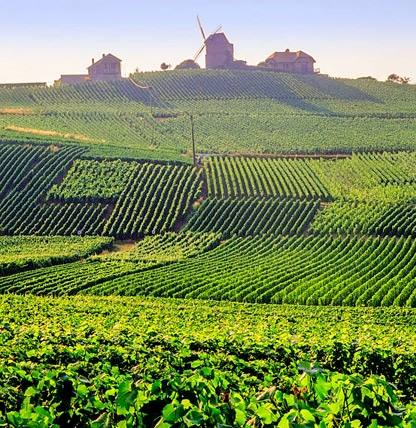
Chardonnay predominates on the Côte des Blancs and Côte de Sézanne, Pinot Noir is planted mainly on the Montagne de Reims, in the eastern Marne Valley and on the Côte des Bar, while Meunier is grown in the western part of the Marne Valley.
In addition to these three main grape varieties, four others are authorized in the specifications: pinot blanc, pinot gris, petit meslier and arbane.
GUIDE: What does Champagnetaste like ?
#VINE GROWERS: what are the best Champagnes?
What are the 10 best Champagne brands?
Revue des vins de France ranking (2014):
Champagne Louis Roederer
Champagne Pol Roger
Champagne Bollinger
Champagne Gosset
Champagne Dom Pérignon
Champagne Jacquesson
Champagne Krug
Champagne Salon
Champagne Deutz
Champagne Billecart-Salmon
Champagne Charles Heidsieck
Champagne Perrier-Jouët
Champagne Veuve Clicquot
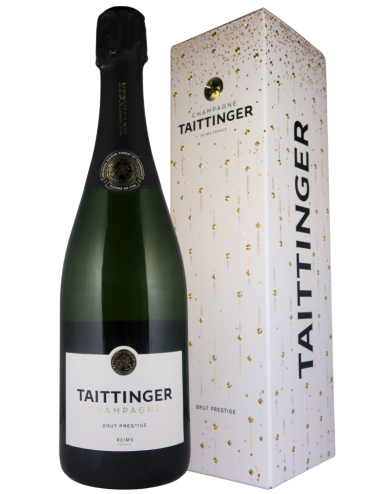
Champagne Taittinger
Champagne Henri Giraud
Champagne Joseph Perrier
Champagne Laurent Perrier
The quality of a champagne brand depends on several key elements linked to that brand. First, there's the importance of the "Champagne" appellation d'origine contrôlée, which guarantees authenticity. Secondly, the brand's reputation and history play an essential role. The type of champagne a brand offers, whether brut, sec or another style, influences taste. Price can also reflect brand quality, although there are variations. Expert assessments and brand ratings offer a further indication of quality. Finally, personal tasting experience is essential to determine whether a champagne brand meets your preferences and budget. So it's a good idea to explore different brands to find the one that best matches your expectations.
Champagne Grand Cru: Sparkling Excellence
Grand Cru champagnes are directly linked to the origin of the grapes, as the Grand Cru de Champagne label indicates that the champagne is made exclusively from grapes grown in communes classified as Grand Cru. Of the region's 300 wine-growing communes, only 17 have been awarded Grand Cru status, established in the early 20th century on the basis of the quality of their harvests, which also influenced the selling price of the grapes.
These Grand Cru villages are mainly divided into two zones: 11 are located on the Montagne de Reims, while 6 are on the Côte des Blancs.
Montagne de Reims Grands Crus: Ambonnay (Champagne Marguet), Aÿ (Champagne Bollinger, Champagne Henri Giraud, Champagne Deutz), Beaumont sur Vesle, Bouzy (Champagne Benoit Lahaye), Louvois, Mailly-Champagne (Champagne Ernest Remy), Piusieulx, Sillery, Tours-sur-Marne, Verzenay (Champagne Hugues Godmé), Verzy.
Côte des Blancs Grands Crus: Avize (Champagne Jacques Selosse), Chouilly, Cramant (Champagne Diebolt Vallois), Le Mesnil-sur-Oger (Champagne Salon, Champagne Le Mesnil), Oger, Oiry.
These Grand Cru villages are renowned for the exceptional quality of their grapes, making them ideal locations for the production of prestigious champagnes.
Which Champagne to choose?
Champagne Blanc de Blancs
Champagne Blanc de Blancs is a type of champagne made exclusively from white grapes, usually Chardonnay. Unlike traditional champagnes, which can be made from a blend of white (Chardonnay) and black (Pinot Noir, Pinot Meunier) grapes, Blanc de Blancs is made from white grapes, generally Chardonnay, but also Arbane, Petit Meslier, Pinot Blanc and Pinot Gris.
This choice of grape variety gives Champagne specific characteristics, notably freshness, lively acidity and aromas of white flowers (hawthorn, honeysuckle, lime blossom, acacia, jasmine, orange blossom), citrus (grapefruit, lemon), exotic fruits (lychee, pineapple), apples, pears and spices (aniseed, ginger), even hints of menthol. Champagne Blanc de Blancs is often considered elegant and refined, and is appreciated for its purity and finesse.
Champagne Blanc de Noirs
Champagne Blanc de Noirs is a type of champagne made from black grapes such as pinot noir and/or meunier. Despite the use of black grapes, blanc de noirs champagne is golden or pale yellow in color, hence the name "blanc". This is due to the fact that only the grape juice is used for fermentation, without maceration of the skins, which prevents color transfer to the must.
Blanc de noirs Champagne offers a rich and varied palette of aromas. It reveals nuances of white and yellow-fleshed fruit, such as peach, apricot, plum and mirabelle plum. There are also notes of red fruit, such as strawberry, raspberry and cherry, as well as accents of black fruit, such as blackberry and blueberry. Citrus fruits like mandarin and orange add a touch of freshness, while exotic fruits like mango and passion fruit add a tropical dimension.
Floral notes such as rose, peony and violet add further aromatic subtlety, sometimes complemented by spices like cinnamon and clove. As Blanc de Noirs ages, it can develop aromas of coffee, cocoa, prune and sometimes even leather. Notes of brioche, fresh butter, cookie dough or toast can also be detected, offering a complex, evolving sensory experience.
Rosé Champagne: blending or maceration ( saignée )
Rosé Champagne is a type of champagne with a pinkish hue, obtained by two distinct methods: Rosé d'assemblage or Rosé de saignée.
Rosé d'assemblage is obtained by adding red wine to a champagne blend. It can be produced by blending 5-20% red wine with the base must of the champagne, or by leaving the grape must in contact with the red grape skins before fermentation. Rosé de macération or Rosé de Saignée is obtained by macerating the juice with black grape skins for 36 hours.
Champagne rosé offers fresh aromas (citrus, wild strawberry), or more suave, powerful aromas (ripe yellow fruit, red berries) or complex aromas, combining fruity notes (wild berries) with hints of undergrowth. It is often considered a versatile, festive choice for a variety of occasions.
What's the difference between Crémant and Champagne?
The main differences between Crémant and Champagne lie in their region of production, the grape varieties allowed, and the method of production. Indeed, Champagne is produced exclusively in Champagne, whereas Crémant is made in different wine-growing regions of France outside Champagne.
The grape varieties used for Champagne are mainly Chardonnay, Pinot Noir and Pinot Meunier, while Crémants can be made from local grape varieties authorized in their respective regions.
In short, although Crémant and Champagne are both quality sparkling wines produced in France, their region of origin, grape varieties and production methods differ.
How to serve Champagne
Champagne is a type of sparkling wine from the Champagne region of France. It is traditionally served in champagne flutes, but can also be served in wine glasses or goblets. To serve champagne correctly, the right temperature is essential. Champagne is best served at between 6 and 10 degrees Celsius.
Champagne flute or coupe?
The champagne flute is long, slender and narrow, often with a tapered neck. This shape helps concentrate the champagne's aromas and preserve the bubbles longer. The flute is often considered elegant and modern, making it a popular choice for formal occasions. The champagne glass has a broad shape with a shallow bowl. It is often presented on an elegant foot. But this one doesn't preserve the bubbles very well. Because of its wide opening, the carbon dioxide in champagne tends to escape quickly, which can lead to a loss of fizz.
For this reason, champagne lovers often prefer more modern, specially designed champagne glasses, such as champagne flutes
Champagne bottles, how many glasses?
Champagne bottles are available in a range of sizes, catering for different occasions and groups of people.
Here's an exploration of the most common champagne bottle sizes, starting with the smallest:
Demi-bouteille (or Demi):
A half-bottle of champagne is an option designed for those who wish to enjoy the precious beverage without the commitment of opening a full bottle. With a capacity of 375 milliliters, it's half the size of a standard bottle, providing the perfect amount for a single person. This format includes 3 glasses. This size is ideal for intimate moments, romantic evenings or simply when you want to enjoy a glass of champagne without having to consume a large quantity.
Standard bottle (or Bouteille):
The standard champagne bottle, with its 750-milliliter capacity, is the most common size found in most stores and wineries. It is equivalent to a classic bottle of wine. This format includes 6 glasses. This size is versatile and suitable for a variety of occasions. It's perfect for small celebrations, dinners with friends and medium-sized events. It serves several glasses of champagne and is suitable for most tables.
Magnum:
The Magnum champagne bottle is a popular choice for group celebrations and special occasions. With its 1.5-liter capacity, it's twice the size of a standard bottle. This format includes 12 glasses. The Magnum adds a touch of elegance and generosity to any event. It is often associated with weddings, major anniversaries, party receptions and other festive gatherings. The large size allows several guests to be served, creating an atmosphere of sharing and festive moments.
These different sizes of champagne bottles are carefully designed to meet the needs and preferences of champagne lovers, whether for a personal tasting, an intimate gathering or a grand celebration. Each brings a unique dimension to the champagne tasting experience, in harmony with the occasion and the desired atmosphere.
How much does Champagne cost?
The price of champagne sales depends on a number of factors, including the brand, the vintage, the region of production and the overall quality of the champagne. Champagne sales can vary considerably, from a few dozen euros to several hundred or even thousands of euros for the most prestigious cuvées. Sales of entry-level champagnes, often referred to as "brut non-vintage", are generally more affordable, while sales of vintage champagnes, from major brands or small producers, tend to be more expensive. Sales of high-end champagnes are often reserved for special occasions, while sales of more affordable champagnes are more common to celebrate everyday moments. Ultimately, champagne sales offer a wide range of options to suit different budgets and preferences.
#MILLÉSIMES: Champagne's milestone vintages
What is a vintage Champagne?
A vintage Champagne is made from grapes harvested in a single exceptional year, unlike non-vintage Champagnes, which are blends of wines from different years. For a champagne to be considered vintage, it must comply with specific production conditions laid down in the appellation's specifications. Volumes of vintage wines are limited to 80% of the volume of the year in question, to guarantee the availability of wines for blending and the creation of reserve wines, essential to the quality of champagnes.
Le dom Pérignon champagne is one of the few Champagne brands to produce only vintage champagnes.
What are the best years for Champagne?
These vintage champagnes are marketed to consumers after at least thirty-six months' bottle ageing from the date of bottling. Exceptional years, such as 1937 and 1947, are considered vintages of the century because of the exceptional quality of the grapes. Certain years, such as 1928, 1929, 1945, 1955, 1990 and 1996, are particularly renowned for producing the finest vintage champagnes. These wines are appreciated for their unique character.