Champagne Drappier
Champagne Drappier
#PROPRIETE : History & Terroir
History of the estate and Maison Drappier
The vineyards of Maison Drappier
The vineyard of Maison Drappierthe vineyards of Maison Drappier, now spread over an impressive 62 hectares, are an essential pillar of this family-run business. However, it is important to note that this surface area does not take into account contracted external supplies.
The vineyard's main location is in the commune of Urville, a wine-growing region that retains a strong identity specific to the Bar-sur-Aube district. This geographical area is strongly influenced by the Pinot Noir grape variety, which is the true king of the vines in this region.
Indeed, Pinot Noir occupies a central and predominant position, accounting for around 70% of the vast vineyard. This grape variety is appreciated for its unique characteristics and its potential to produce high-quality wines.
Complementing Pinot Noir is Pinot Meunier, which accounts for 15% of the total vineyard.
Chardonnay, another classic Champagne grape variety, is also present, though less predominantly, with a representation of 9%. In addition, Maison Drappier maintains a connection with ancient grape varieties, which account for 6% of the vineyard. This diversity of grape varieties enables Maison Drappier to create complex, balanced blends for its cuvées.
What's more, this commitment to sustainable viticulture has been recognized by the award of Agriculture Biologique certification for certain cuvées, and "Carbone Neutre" certification for others. This certification attests to Maison Drappier's commitment to producing grapes of the highest quality while respecting the environment. This approach is in line with the history of the Maison Drappier, which continues to preserve and enhance its terroirs while producing champagnes of excellence.
The history of the Drappier family dates back to the 17th century with the birth of Rémy Drappier in 1604, who, like Nicolas Ruinart, was a cloth merchant in Reims. However, it wasn't until 1808 that one of the family's ancestors, François Drappier, decided to settle in Urville, in the Champagne region, where he began to cultivate a vineyard of a few hectares, thus giving birth to the family estate.
Michel Drappier, a key figure in the House of Drappier.
Michel Drappier's maternal grandfather, Georges Collot, played a key role in the Drappier family's winegrowing history. Georges Collot was the first to decide to replant the Pinot Noir grape variety in the region, which became a defining characteristic of the Drappier vineyard and the Aube region. Today, Pinot Noir accounts for 70% of Drappier's vineyards.
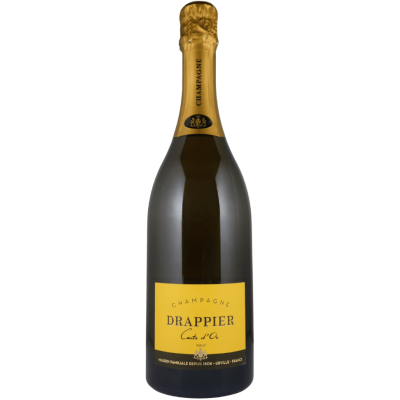
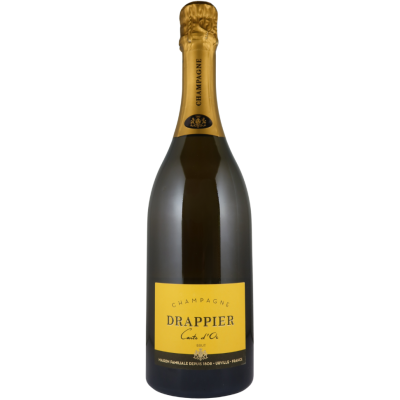
In 1952, André and Micheline Drappier had an innovative idea and created the cuvée Carte d'Or, recognizable by its distinctive yellow label. This cuvée evokes quince jelly, a yellow fruit whose aromatic notes can be found in every bottle.
In 1957, the region suffered a historic frost that destroyed 95% of the harvest. In response, André Drappier introduced the Pinot Meunier grape variety, which is more resistant to springtime cold.
In 1968, Micheline Drappier came up with the idea of creating a Rosé Champagne, made exclusively from Pinot Noir grapes, a decision that helped expand Maison Drappier's range of wines. This cuvée has become a staple of the house's production, appreciated for its quality and unique character.
Domaine Drappier terroir
The terroir of Domaine Drappier is mainly located in the commune of Urville, in the district of Bar-sur-Aube, in the Champagne region. The soils are characterized by a mixture of Jurassic and Kimmeridgian limestone, which contributes to the complexity of the wines.
What was General de Gaulle's favorite champagne?
General Charles de Gaulle did indeed have a strong preference for one Champagne, and it was DRAPPIER Champagne, so much so that the House created a special cuvée in his honor, named "Charles de Gaulle." This champagne was frequently selected by the General for his private receptions at Colombey-les-Deux-Églises. He was seduced by the authenticity and distinctive aromas of this cuvée, which made it his preferred choice.
#WINES FROM THE DOMAIN: Appellations and Cuvées
Champagne appellation
The region Champagne in France is famous for its champagne, produced using the traditional method. The Chardonnay, Pinot Noir and Pinot Meunier grape varieties offer a variety of styles, from dry to slightly sweet, as well as elegant rosés. Grands Crus and Premiers Crus showcase exceptional vineyards, while strict regulations safeguard quality. Champagne is a symbol of celebration and refinement, exported worldwide for its unique finesse and freshness.
Discover our Champagne selection
Drappier cuvées
Discover the Drappier Champagne cuvées that form the basis of all their variations.
Drappier Champagne cuvées
The House of Drappier offers a wide range of cuvées, each one the basis of different declinations. Drappier's main champagne bottles include :
- Carte d'Or
- Brut Nature
- Brut Nature sans soufre
- Clarevallis
- Rosé de Saignée
- Brut Nature Rosé
- Blanc de Blancs
- Quattuor*
- Charles de Gaulle
- Millésime Exception
- Grande Sendrée
- Grande Sendrée Rosé
All you need to know about these cuvées
Champagne Drappier carte or is mainly made from the noble Pinot Noir grape variety, which accounts for at least 80% of the blend, along with 15% Chardonnay and 5% Meunier. This gives the champagne rich aromas of stone fruit, notably white peach. A spicy note sets the stage for a powerful, complex palate, characterized by a distinctive touch of quince jelly. Vinification takes place on Jurassic and Kimmeridgian limestone soils, as part of a sustainable, integrated approach. The champagne is neither filtered nor decolored, and its high proportion of Pinot Noir gives it a characteristic close to that of a Blanc de Noirs.
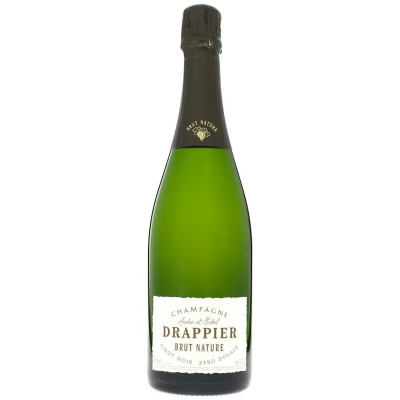
Brut Nature offers a unique experience: a 100% Pinot Noir cuvée, with no added sugar (dosage) and a natural residual sugar content of less than 2g per bottle. Its vermilion-gold color delights the eye, while its nose reveals aromas of freshly pressed black grapes, red and white fruit, and citrus. On the palate, generous vine peach pulp and a bouquet of aromatic herbs unfold, giving way to subtle spicy notes on the finish. This Champagne, both fine and taut, offers an experience of great purity for lovers of pure sensations.
This sulfur-free Brut Nature, made from 100% Pinot Noir, is an exceptional cuvée in which no sulfur is added during vinification. This cuvée is remarkably round, thanks to the ripeness of the grapes and the time spent in our cellars. The nose reveals very fresh notes of pear, lemon and hazelnut. On the palate, a subtle touch of malt and vibrant minerality enliven this wine brimming with vitality. This cuvée will delight enthusiasts and purists in search of new, exquisite taste sensations.
Champagne Drappier blanc de blancs
This white Champagne from Maison Drappier is mainly made from Chardonnay, a white grape variety. Uniquely, however, the House sometimes adds a touch of Pinot Blanc, called "Blanc Vrai" in Champagne, to enrich its complexity and roundness.
On the nose, this wine offers aromas of white peach, pear and floral notes of peony. On the palate, it has a marked minerality, a slight biscuity touch, a creamy texture and constant freshness.
Vinification takes place in Jurassic and Kimmeridgian limestone soils, using sustainable, integrated farming methods. The process includes low pressure in a plate press, a first press, gravity vinification, natural settling, malolactic fermentation, and is unfiltered. Around 5% of the wines are aged in foudre, and a low dosage of sulfite is used. Bottle ageing lasts 30 months.
Champagne Drappier rosé
Brut Nature Rosé de Champagne is a wine made from 100% Pinot Noir grapes. It is produced using the saignée method, with no added sugar (Dosage Zéro), and no filtration. This cuvée is appreciated for its freshness, minerality and purity. Its aromas of rose petals, red fruit, citrus, tangerine and white pepper offer a unique perspective on Champagne rosé.
Vinification takes place on Jurassic and Kimmeridgian limestone soils, as part of a sustainable "culture raisonnée". The winemaking process includes low pressure in a plate press, a first press, gravity fermentation, natural settling and malolactic fermentation. Champagne is neither filtered nor bleached.
Clarevallis takes its name from the Latin of the Abbey of Clairvaux, Saint Bernard being the founder of the Abbey. The grapes are organically grown on the Urville hillside, a planting site dating back to Cistercian times. This cuvée reveals delicate notes of elderberry and violet, with a chalky minerality that blends harmoniously with the roundness of the Pinot. On the palate, balanced tension is softened by subtle dosage, giving way to pleasantly bitter flavors for a unique taste experience.
Rosé de Saignée stands out as a rare champagne cuvée made using the saignée method. A few days of maceration give it a color that reveals the influence of Pinot Noir. On the nose, seductive notes of red berries and violets are accompanied by a hint of spice. Despite moderate dosage, the palate stands out for its remarkable expressiveness and striking freshness, leaving a subtle note of licorice on the finish. It's a cuvée that stands out for its winemaking method and rich, balanced aromatic palette.
Brut Nature Rosé is the quintessential Champagne rosé, made from 100% Pinot Noir using the saignée method, with no added sugar (Dosage Zéro) and no filtration. This cuvée will appeal to lovers of freshness, minerality and purity. It is distinguished by enchanting notes of rose petals, red fruit, citrus, tangerine and even a subtle touch of white pepper. Brut Nature Rosé reveals a unique and captivating facet of rosé Champagne, reflecting the exceptional savoir-faire of Maison Drappier.
Quattuor takes its name from the Latin, meaning "four," in reference to its equal blend of the 4 forgotten Champagne grape varieties that make it up . With a balanced blend of 25% Arbanne, 25% Petit Meslier, 25% Blanc Vrai, and the classic touch of 25% Chardonnay, it offers a unique taste experience. This cuvée reveals aromas of brilliantly fresh grapes, sparkling citrus fruit, delicate white flowers and honeyed apples. Quattuor embodies the quintessence of a great Champagne, characterized by its precise minerality and exceptional finesse. A cuvée that reveals all the richness of Champagne tradition, yet stands out for its unique character.
Charles de Gaulle, a cuvée named in honor of General de Gaulle, bears the legacy of the famous French statesman who fully savored the exceptional quality of Drappier Champagne. The champagne was personally chosen by Charles de Gaulle for his private receptions at Colombey-les-Deux-Églises, illustrating his fondness for Drappier. The cuvée embodies a truly exceptional character with its composition of 80% Pinot Noir and 20% Chardonnay. With a very fine nose of citrus fruit, apple, almond and nutmeg, this cuvée represents a symbol of great prestige.
Grande Sendrée is a cuvee blended from 55% Pinot Noir and 45% Chardonnay. It takes its name from a parcel of vines that was covered in ashes after the devastating fire that struck Urville in 1836. A spelling error when copying the land register introduced an "S" into the name of this cuvée, which remains today. The 2012 vintage, marked by an icy winter and nights of -20°C followed by rain, was followed by a warm summer, favoring optimal grape development. Despite the scarcity caused by a violent hailstorm, this harvest was exceptional. The Grande Sendrée cuvée, named after an 18th-century bottle discovered in the Urville cellars, is stirred entirely by hand. Since the 1999 vintage, it has also been available in Magnum format, offering a rare and precious Champagne experience in all its splendor.
Grande Sendrée Rosé is a cuvee blended from 92% Pinot Noir and 8% Chardonnay. This cuvée's complex nose reveals aromas of strawberry, raspberry and violet, enhanced by toasty notes. On the palate, supple roundness is accompanied by a robust structure reminiscent of red fruit, for a fresh, complex experience. This is a Champagne of unrivalled power and elegance.
Exceptional vintages
Château Drappier proudly presents "Réserve de l'Œnothèque", a collection that embodies the living history of this family home, carefully preserved in Cistercian cellars dating back to the 12th century. This rare collection brings to light old vintages, some of them exceptionally rare.
When they feel that these vintages have reached the necessary maturity to reveal all the intensity and uniqueness of their year of creation, they proceed to disgorgement in small batches, sometimes even bottle by bottle. This approach embodies Château Drappier's commitment to preserving and celebrating the authenticity of each vintage.
Among these treasures are the Réserve de l'Œnothèque from 1959, 1979 and 2002, as well as the Magnum from 2006. There's also the Exception Vintage Magnum from 2010, and the Blanc de Blancs Grand Cru from 2015. Each of these bottles tells a unique story, shaped by time and tradition, offering connoisseurs and amateurs alike the exceptional opportunity to taste captivating moments in the history of Drappier Champagne.
The "Immersion" box, a unique experience
The idea of immersing bottles of champagne in Brittany at a depth of 30 meters is a fascinating experience that adds a unique dimension to wine maturation. Under this underwater pressure, at a constant temperature and with no light, the bottles house a Champagne wine that has undergone an exceptional journey. During one, two or three years of immersion, the wine evolves in a way that gives it distinct characteristics, resulting from this special interaction with the marine environment.
To enable a unique comparative tasting experience, Maison Drappier offers a wooden box entitled "IMMERSION", which includes two bottles of the same champagne. One of these bottles is extracted from the ocean depths, while the other has been matured in the traditional cellars of Maison Drappier in Urville. This comparative tasting allows wine lovers to discover the subtle nuances that underwater immersion can bring to champagne, offering a unique and captivating taste experience. It's an innovative and creative way to explore the possibilities of wine maturation, and to appreciate the influences of the environment on the character of champagne.
Where to find and buy Champagne Drappier? Champagne Drappier bottle prices.
On our site, you can easily buy the variety from the "Champagne Drappier" range that meets your specific criteria. Whether you're looking for a brut, rosé, blanc de blancs or vintage champagne, our comprehensive catalog offers a diverse selection. Each cuvée is accompanied by detailed descriptions and food and wine pairings to help you make an informed choice.
Bottles of Drappier champagne are available at prices ranging from €30 to over €300, depending on the vintage and type of champagne. The most expensive are the exceptional vintages, such as the Cuvée Carte d'Or, one of the house's most popular champagnes.
#IN BRIEF: Figures
Region: Champagne
Appellation: Champagne
Surface area: 62 Hectares
Red grape varieties: Pinot Noir, Pinot Meunier
White grape varieties: Chardonnay, Pinot Blanc, Petit Meslier, Arbanne, Blanc Vrai
Vine culture: Organic, ecological and "Carbon Neutral" accredited